
Every day, millions of people search online for answers before making a purchase. Businesses that provide those answers through helpful blogs, videos, and guides often earn more trust and attract more customers. But what is content marketing? It’s a digital marketing strategy focused on creating valuable content that informs your audience, improves online visibility, and builds lasting customer relationships.
Consumer behavior has evolved, making content marketing an essential part of every successful marketing strategy. Most buyers research extensively before making a purchase by reading reviews, comparing products, and seeking reliable information. Traditional advertising often struggles to influence these informed customers because it focuses on promotion rather than education. Content marketing bridges this gap by offering valuable insights that guide potential customers through every stage of the buying journey, ultimately building trust and increasing conversions.
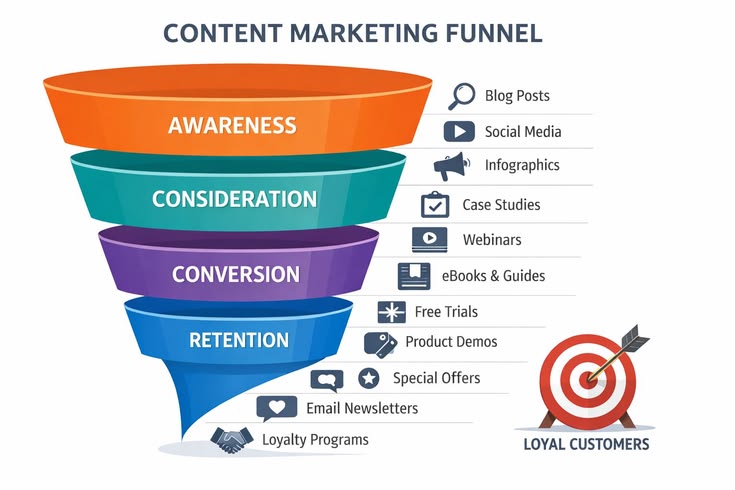
What Is Content Marketing?
Content marketing is a long-term strategy that focuses on creating and sharing valuable content to educate, inform, or entertain your target audience. Instead of pushing products or services, it helps build trust and credibility over time. As your audience begins to rely on your content, they are more likely to choose your brand when they’re ready to make a purchase.
Businesses use this approach because it works differently than traditional advertising. Instead of interrupting someone’s day with a promotional message, content marketing draws people in because they’re actively looking for the information you’re providing. That difference changes the entire relationship between a brand and its audience — from “we’re selling to you” to “we’re helping you.”
Consider a few practical examples: a financial advisor publishing plain-English explainers on retirement planning, a fitness brand releasing free workout guides on YouTube, or a SaaS company writing detailed tutorials on problems their software solves. In each case, the content itself is the value, and the brand recognition happens as a natural side effect.
It’s also worth clarifying what content marketing is not. It isn’t a one-off blog post published for the sake of having content on a website, and it isn’t the same thing as advertising, even though the two frequently work together in a broader marketing plan. A genuine content marketing strategy is intentional — every piece is created with a clear purpose, whether that’s educating a reader, answering a common question, or gently guiding someone closer to a purchase decision over time.
Why Content Marketing Is Important in Digital Marketing
Content marketing in digital marketing isn’t just a nice-to-have anymore — it’s often the foundation everything else is built on. Here’s what it delivers.
Brand Awareness
Every article, video, or post you publish is a chance for someone new to discover your brand. Content that ranks well or gets shared widely puts you in front of audiences that ads alone would never reach.
Customer Trust
Trust is earned gradually, through repeated exposure to helpful, accurate information. A brand that consistently teaches and informs is far more believable than one that only ever tries to sell.
Organic Traffic
Once content is published and indexed, it can keep attracting visitors for years without ongoing ad spend. This is one of the biggest advantages content has over paid channels.
Lead Generation
Valuable content — like downloadable guides or in-depth resources — gives people a reason to share their contact information, turning casual readers into potential customers.
Long-Term Business Growth
Because content assets keep working after they’re published, they create a compounding effect. A strong library of content becomes a growth engine that requires less and less new investment to sustain over time. Think of the difference between renting attention through ads and owning a durable asset: once a guide or video starts ranking or gaining traction, it keeps delivering value without additional spending, which is a fundamentally different economic model than most businesses are used to.
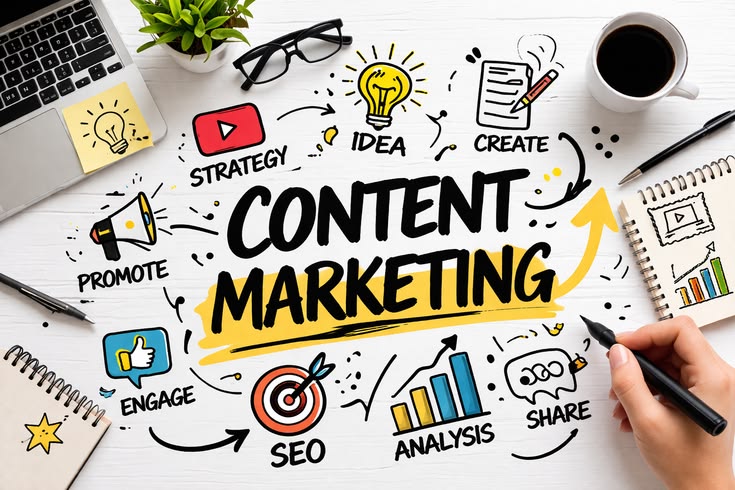
Types of Content Marketing
There’s no single “right” format for content marketing — the best approach usually combines several types based on your audience’s preferences.
Blog Posts
Blog posts remain a cornerstone of most content strategies because they’re flexible, searchable, and effective at answering specific questions your audience is typing into Google.
Articles
Longer, more research-driven than typical blog posts, articles are often used to establish deeper authority on a subject, especially for topics that require nuance or data-backed explanations.
Videos
Video content thrives on platforms like YouTube, Instagram, and TikTok, offering an engaging way to demonstrate products, explain concepts, or simply build a more personal connection with viewers.
Infographics
When you need to communicate statistics or processes quickly, infographics turn complex information into a format that’s easy to digest and share.
Podcasts
Podcasts allow brands to have longer, more conversational discussions with their audience, often building stronger loyalty because listeners spend extended time with the content.
Social Media Content
Short-form posts, reels, and stories keep a brand visible day-to-day and give audiences a more casual, real-time way to interact with a company.
Email Marketing
Email remains one of the most direct and cost-effective ways to nurture an audience, delivering content straight to people who have already expressed interest in your brand.
Case Studies
Case studies offer concrete proof of results, which makes them especially persuasive for audiences who are close to making a purchasing decision.
eBooks
Downloadable, in-depth resources like eBooks work well for capturing leads, since readers are often willing to provide their email in exchange for detailed, valuable information.
There’s no requirement to use every format right away. Most successful content marketing strategies start with one or two formats that best match where the target audience already spends time, then expand gradually as resources and confidence grow.

Content Marketing for SEO
Content marketing for SEO is where strategy and visibility intersect — and understanding this connection is essential if you want your content to actually get found.
Search Intent
Every search has an intent behind it, whether the person wants information, a comparison, or a product. Content that matches that intent precisely tends to perform far better in search results.
Keyword Optimization
Identifying the exact terms your audience searches for, and weaving them naturally into your content, helps search engines match your pages to relevant queries.
Internal Linking
Connecting related pages on your own site helps both users and search engines navigate your content more effectively, while also distributing authority across your website.
User Experience
Fast-loading pages, clear formatting, and mobile-friendly design all influence how search engines evaluate and rank your content.
EEAT
Google places heavy weight on Experience, Expertise, Authoritativeness, and Trustworthiness. Content that demonstrates real, first-hand knowledge tends to outrank generic, surface-level writing.
Featured Snippets
Clear, well-structured answers to specific questions have a strong chance of being featured at the very top of Google’s search results, ahead of standard listings.
Organic Rankings
Consistently publishing quality content signals to search engines that your site is an active, reliable resource, which supports stronger rankings across your entire domain over time.
Taken together, these factors show why content marketing for SEO and traditional SEO tactics aren’t really separate disciplines anymore. Content without proper structure and keyword alignment struggles to be discovered, while technical SEO without genuinely useful content rarely sustains rankings for long. Treating them as one connected effort tends to produce far stronger, longer-lasting results.
Content Marketing Services
Many businesses rely on professional content marketing services to execute their strategy without needing a full internal team. Common offerings include:
- SEO Content Writing – Producing content specifically structured and optimized to rank in search engines
- Website Content – Writing core site pages like homepages, service pages, and About sections
- Blog Writing – Creating regular, high-quality blog content to build authority and traffic
- Landing Page Copywriting – Crafting persuasive copy designed to convert visitors into leads or customers
- Email Content – Developing newsletters and campaigns that nurture subscribers
- Social Media Content – Producing platform-specific posts and visuals
- Product Descriptions – Writing compelling, SEO-friendly descriptions for e-commerce listings
- Content Audits – Reviewing existing content to find gaps, outdated information, or missed opportunities
- Content Strategy – Planning the overall direction, topics, and cadence of a brand’s content efforts
Choosing the right provider often comes down to whether they understand your specific industry and can demonstrate measurable past results, not just polished writing samples. A good working relationship also depends on clear communication about goals, timelines, and how success will be measured, so both sides know what a “win” actually looks like before work begins.
Benefits of Content Marketing
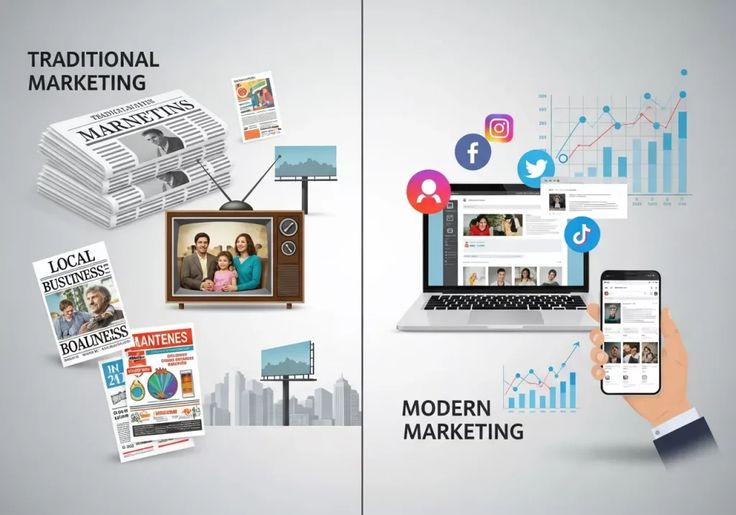
When compared side-by-side with traditional advertising, the advantages of content marketing become clear.
| Factor | Traditional Marketing | Content Marketing |
| Cost | Often expensive, ongoing spend required | Lower cost, especially over time |
| Reach | Limited to ad placements and impressions | Expands organically through search and shares |
| ROI | Harder to track precisely | Measurable through traffic, leads, and conversions |
| Customer Engagement | Mostly one-directional | Encourages interaction, comments, and sharing |
| Long-Term Value | Stops when spending stops | Continues generating traffic and leads over time |
Beyond these direct comparisons, content also builds a form of digital equity. Every piece you create adds to a searchable library that keeps working in the background, long after the initial effort of creating it. Over several years, this library can become one of a company’s most valuable assets, quietly generating traffic, leads, and credibility without requiring ongoing spend to maintain.
How to Build a Successful Content Marketing Strategy
Ready to put this into practice? Follow these steps to build a strategy that actually delivers results.
- Define Goals – Be specific about what success looks like, whether it’s more traffic, more leads, or stronger brand recognition.
- Understand Your Audience – Research their pain points, interests, and the platforms where they spend their time.
- Keyword Research – Find out exactly what your audience is searching for, so your content has a real chance of being discovered.
- Content Planning – Organize topics into a calendar that balances different formats and covers your audience’s needs comprehensively.
- Content Creation – Prioritize depth and accuracy over volume; one excellent piece will usually outperform five mediocre ones.
- SEO Optimization – Structure content with clear headings, natural keyword usage, and strong internal linking.
- Promotion – Actively share your content through email, social media, and relevant online communities rather than relying on passive discovery.
- Performance Tracking – Regularly review analytics to identify what’s resonating and adjust your approach accordingly.
Common Content Marketing Mistakes to Avoid
Even experienced marketers fall into these traps. Watch out for:
- Creating content without a clear strategy, which leads to inconsistent messaging and wasted effort
- Writing for yourself instead of your audience, focusing on what you want to say rather than what readers need
- Being overly promotional, which erodes the trust content marketing is supposed to build
- Skipping keyword research, resulting in content that nobody is actually searching for
- Publishing inconsistently, which makes it difficult to build audience habits or momentum
- Failing to promote content after publishing, assuming it will get discovered on its own
- Ignoring performance data, missing clear signals about what’s working and what isn’t
A little planning and regular review can prevent most of these issues before they derail your results. Setting a simple content calendar and revisiting your top-performing pages every few months to update or expand them often does more good than constantly chasing brand-new topics.
Future Trends in Content Marketing
The landscape keeps shifting, and staying aware of what’s ahead helps future-proof your strategy.
AI-Assisted Content Creation
AI tools are increasingly used for research, drafting, and optimization, though the strongest content still relies on human judgment, editing, and genuine expertise.
Voice Search
As more people use voice assistants, content is being adapted to match natural, conversational, question-based queries.
Interactive Content
Quizzes, calculators, and interactive tools are becoming more common because they hold attention far longer than static pages.
Video Marketing
Short-form and long-form video content continues to dominate engagement metrics across nearly every platform.
Personalization
Audiences increasingly expect content tailored to their specific interests, behaviors, and stage in the buying journey.
User-Generated Content
Reviews, testimonials, and customer-created content are gaining influence because they feel more authentic than brand-produced material.
None of these trends change the underlying fundamentals, though. Tools and formats will keep evolving, but the brands that succeed will still be the ones that understand their audience deeply and consistently deliver genuine value. Technology can speed up production, but it can’t replace the judgment, empathy, and expertise that make content actually worth someone’s time.
Conclusion
At this point, the answer to what is content marketing should feel clear: it’s a strategic, long-term approach to building trust and visibility by consistently offering real value instead of constant sales pitches. From blogs and videos to podcasts and case studies, there are countless ways to bring this strategy to life, and the businesses that commit to it tend to see steadily compounding results rather than short bursts that fade when spending stops.
The best time to start is now. Pick one content format, focus on genuinely understanding your audience, and commit to consistency over perfection. Momentum builds quickly once you begin publishing content that people actually find useful — so take that first step today and start turning your knowledge into a growth engine for your brand.
FAQs
What Is Content Marketing, and why is it important for businesses?
Content marketing is a strategy that focuses on creating and sharing valuable, relevant, and consistent content to attract and retain a target audience. It helps businesses build trust, increase brand awareness, generate leads, and improve long-term customer relationships.
What Is Content Marketing used for?
Content marketing is used to educate potential customers, answer their questions, showcase expertise, and encourage them to take action. Businesses use it to drive website traffic, improve SEO, and support their overall marketing goals.
What Is Content Marketing, and how does it differ from traditional advertising?
Unlike traditional advertising, which directly promotes products or services, content marketing provides useful information that helps customers make informed decisions. Instead of interrupting people with ads, it attracts them through valuable content.
What Is Content Marketing for beginners?
For beginners, content marketing means creating helpful blogs, videos, social media posts, email newsletters, or guides that solve your audience’s problems. The goal is to build trust first, making it easier to convert readers into customers over time.
What Is Content Marketing, and what types of content can businesses create?
Businesses can create blog posts, articles, videos, infographics, podcasts, case studies, eBooks, email campaigns, social media content, webinars, and FAQs. The best format depends on the audience and business objectives.
What Is Content Marketing, and how does it help with SEO?
Content marketing improves SEO by publishing high-quality, keyword-focused content that answers users’ search queries. Well-optimized content can rank higher on search engines, attract organic traffic, and increase website visibility.
What Is Content Marketing, and how long does it take to see results?
Content marketing is a long-term strategy. While some improvements in traffic and engagement may appear within a few months, significant results often take six to twelve months, depending on your industry, competition, and content quality.
What Is Content Marketing, and is it suitable for small businesses?
Yes. Content marketing is one of the most cost-effective ways for small businesses to compete with larger brands. By consistently creating valuable content, small businesses can attract customers, build credibility, and grow their online presence.
What Is Content Marketing, and what are the biggest mistakes to avoid?
Common mistakes include publishing inconsistent content, ignoring audience needs, using too many promotional messages, neglecting SEO, and failing to measure performance. A successful strategy focuses on providing value before selling.
What Is Content Marketing, and how can you create an effective strategy?
An effective content marketing strategy starts with understanding your target audience, setting clear goals, conducting keyword research, creating high-quality content, promoting it across multiple channels, and regularly analyzing performance to make improvements.
What is content marketing exactly? Content marketing is the practice of creating and distributing valuable, relevant content to attract and engage a target audience, with the goal of building trust rather than making an immediate sale.
How does content marketing fit into digital marketing overall? Content marketing in digital marketing works alongside SEO, email, and social media, often serving as the foundation that supports and fuels the other channels.
What’s the difference between content marketing and advertising? Advertising interrupts an audience with a direct promotional message, while content marketing attracts an audience by offering something genuinely useful first.
How soon can I expect results from content marketing? Most businesses begin seeing noticeable traffic and engagement within three to six months, with stronger results building over the following year.
Should I hire content marketing services or do it myself? It depends on your time and expertise. Many businesses start in-house and bring in content marketing services once they need more consistency or specialized skills.
Which content types perform best for SEO? Blog posts, articles, and case studies tend to perform especially well for content marketing for SEO, since they can target specific, detailed search queries.